
Washing machine repairs · Often same day
Washing Machine Repairs Sydney: Front & Top Loaders, All Brands
Water sitting in the drum. A door that won’t open. A spin cycle that shakes the whole laundry. Whatever your washing machine is up to, we’ll come to you anywhere in Greater Sydney, often the same day, find out what’s wrong and give you the price in writing before we touch a thing. Every repair comes with a 12-month parts and labour warranty.
- Front loaders, top loaders & washer-dryers
- Price in writing before we touch a thing
- 12-month parts & labour warranty
12-month warrantyParts & labour, in writing
Same-day serviceRing on a weekday morning
Upfront quotePrice before work starts
Fully insuredPublic liability cover
At a glance
Washing Machine Repairs in Sydney at a Glance
Machines we repair
Front loaders, top loaders, washer-dryer combos, plus stacked and compact machines in apartments
Brands
Samsung, LG, Westinghouse, Electrolux, Bosch, Simpson, Whirlpool and the other big names
Where
Homes and rental properties across Greater Sydney. Every job is done by our own insured technicians
Warranty
12 months on parts and labour, shown on your invoice
Hours
Mon–Fri 8am–5pm, Sat 9am–12pm. Ring on a weekday morning and we can usually get to you the same day
Payment
On the day, by EFTPOS, cash, bank transfer or PayID
Washer playing up?
Problems we fix
Common Washing Machine Problems We Fix in Sydney
Almost every washer fault we see fits one of the eight problems below. Each has a handful of likely causes. We check the most likely one first and work down the list, which is why you won’t end up paying for a part your machine never needed.
- We test the most likely cause first
- Written price before any part is fitted
- Parts that fail most often are carried in the van
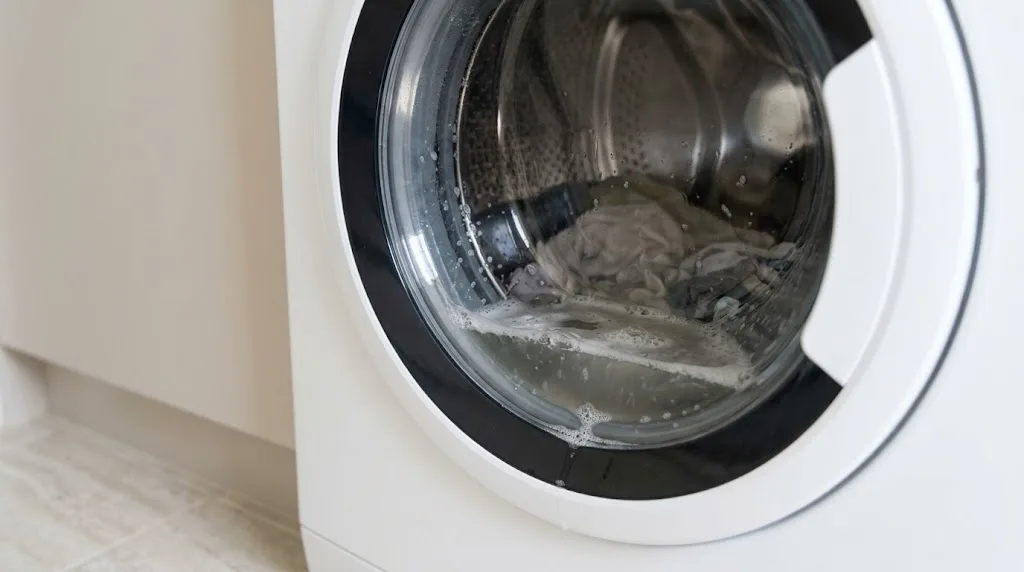
Washing Machine Not Draining
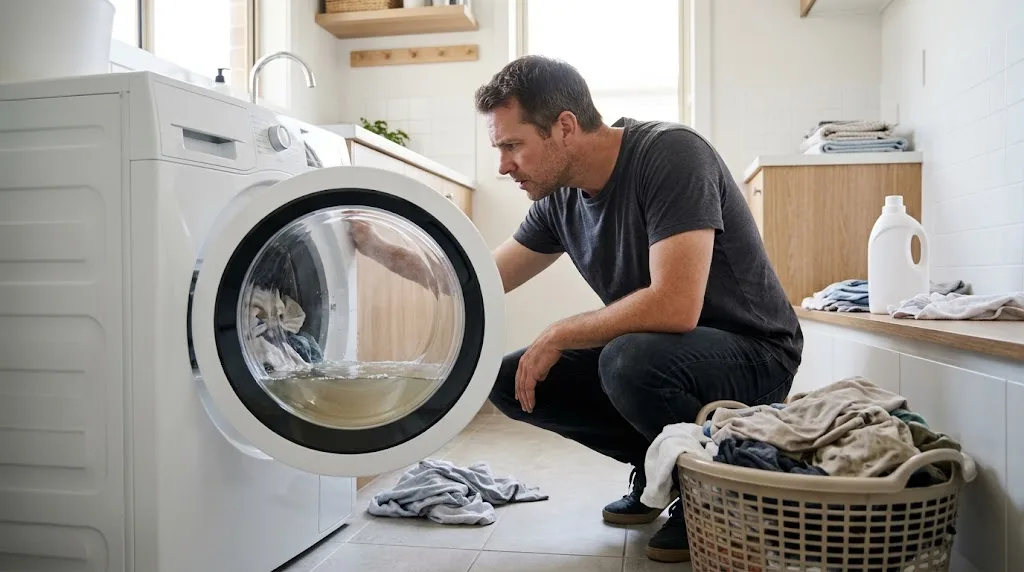
There’s water left in the drum, or a drain error flashes at the end of the cycle. Have a listen while it tries to empty. If the pump hums but nothing moves, something is probably stuck in it. If it’s silent, the pump itself or its wiring has most likely given up. Socks, coins, hair ties and bra underwires are the things we pull out of drain pumps most often. We clear the blockage or fit a new pump, then run a full drain and spin before we leave to make sure it’s sorted.
Washing Machine Not Spinning
The clothes come out dripping. Try this first: put in a few towels, spread them out and run a spin-only cycle. If it spins, the machine is fine and the last load was just lopsided. If it doesn’t, look at the drain side before anything else, because most washers refuse to spin until the water has gone. After that, the usual suspects are a worn belt, worn motor brushes, a tired motor, or a door lock or lid switch that isn’t telling the machine it’s safe to spin.
Washing Machine Leaking Water
Where the water turns up, and when, tells us most of the story. A leak while it’s filling normally means the inlet hose or valve at the back. A puddle at the front during the wash tends to be a torn door seal or a clogged detergent drawer. Water that appears while it’s draining is more likely the pump, the drain hose, or a filter cap that wasn’t done up tight after a clean. Until we’ve had a look, turn the taps off, unplug it and keep water away from the power point.
Door Won’t Open or Won’t Lock
Front loaders keep the door locked while there’s water inside, and plenty of models hold it shut for a minute or two after the cycle finishes, so give it a moment. If it’s still locked after that, there’s either water left in the drum or the door lock (also called an interlock) has failed. If the door won’t lock at all, the machine won’t start, and the lock or a worn door catch is normally to blame. Whatever you do, don’t force the handle. A snapped handle turns a quick fix into a much bigger job.
Won’t Start or Stops Mid-Cycle
Start with the display. Completely blank? That points to the power supply or the control board. Lights on, but nothing happens when you press start? The door lock probably isn’t engaging. If it starts fine and then stops halfway through, a drain fault or a faulty water level (pressure) sensor is the likely cause. We check the power first, then test each part in turn, so you only pay for the one that has actually failed.
Loud Banging, Shaking or Walking on Spin
A bit of movement on spin is normal. Banging, a roar like a jet taking off, or a machine that wanders across the laundry floor isn’t. Worn suspension rods or shock absorbers, uneven feet and failing drum bearings are the common causes. You can check the bearings yourself: with the machine off and empty, grab the top of the drum through the door and lift. A clunk, or a lot of up-and-down movement, means the bearings are likely worn, and on a front loader that’s one of the bigger repairs. One more thing: if the machine is brand new and shaking violently, the transit bolts may still be in the back.
Not Filling or Filling Slowly
If you’re getting a water supply error, or the machine hums and stays dry, start simple. A half-closed tap, a kinked hose, a blocked inlet screen or a failed inlet valve covers most cases. The inlet screens are small mesh filters where the hoses screw on, and they can clog with grit after water main work in your street. Low water pressure can set off fill errors too.
Error Codes on the Display
Most modern washers show a code when something goes wrong. OE on an LG, 5C on a Samsung, E18 on a Bosch and E20 on a Westinghouse top loader all mean the same thing: the machine can’t drain properly. A code tells you which system is in trouble (drain, fill, door or balance). It doesn’t tell you which part has failed, and that’s where testing comes in. Give us the code when you book, or send us a photo of the display, and we’ll know what to bring.
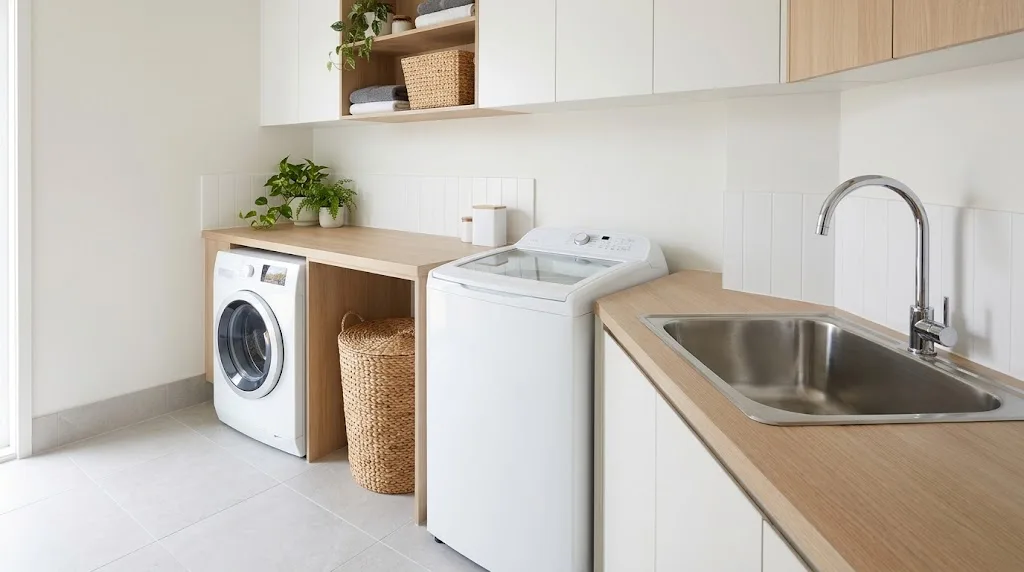
Machines we repair
Front Loader, Top Loader and Washer-Dryer Repairs
Each type of machine fails in its own way, and the repair is different too. Here’s what we tend to find.
Front loaders
They use less water and treat clothes gently, but they depend on a door lock, a rubber door seal and drum bearings, and all three wear with age. Door, drain and seal faults are normally fixed on the first visit. Bearings get their own quote, because on many models the drum and tub have to come out.
Top loaders
Agitator and impeller models, including the Simpson and Westinghouse machines you’ll find in plenty of Sydney laundries. We mostly replace lid switches, drive belts, suspension rods, inlet valves and drain pumps. If yours fills but won’t agitate or spin, a faulty lid switch or a worn belt is the first thing we’d check.
Washer-dryer combos
The fault might be on the washing side, the drying side or the control board they share. We test both before we quote, so you know exactly what’s wrong and what it’ll cost to fix.
Compact and apartment machines
Stacked units, machines tucked into laundry cupboards and European-style laundries. When you book, let us know about stairs, lifts, parking or building access rules, and we’ll plan around them.
On the job
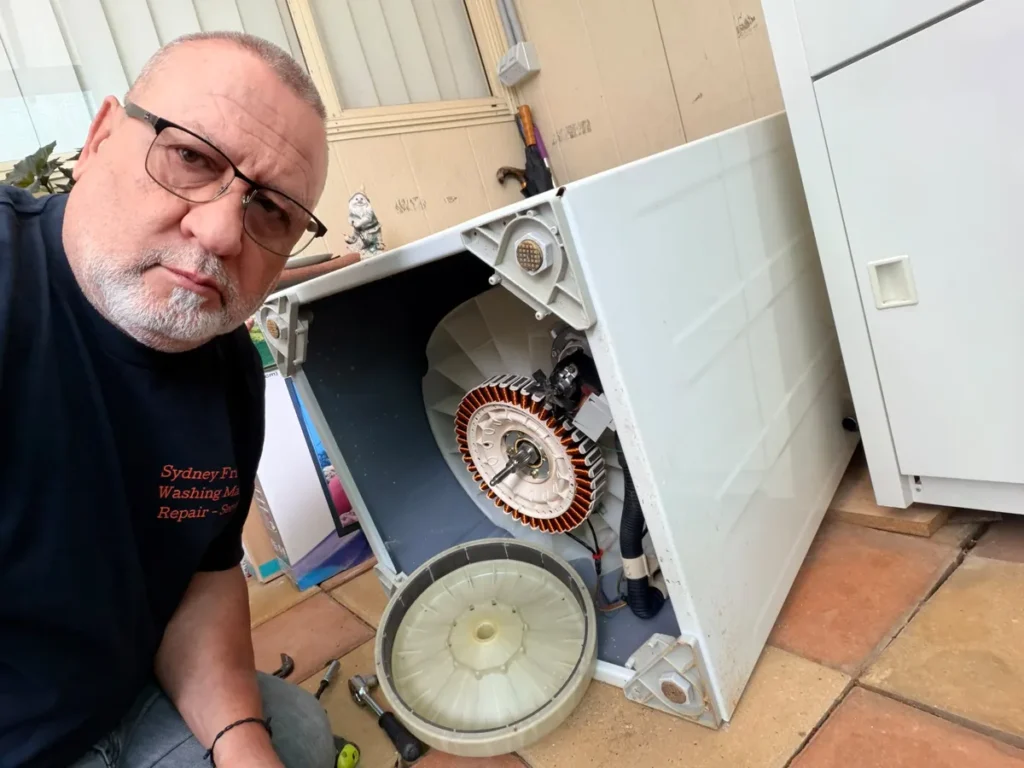
Motor and Stator Repairs on Direct-Drive Washers
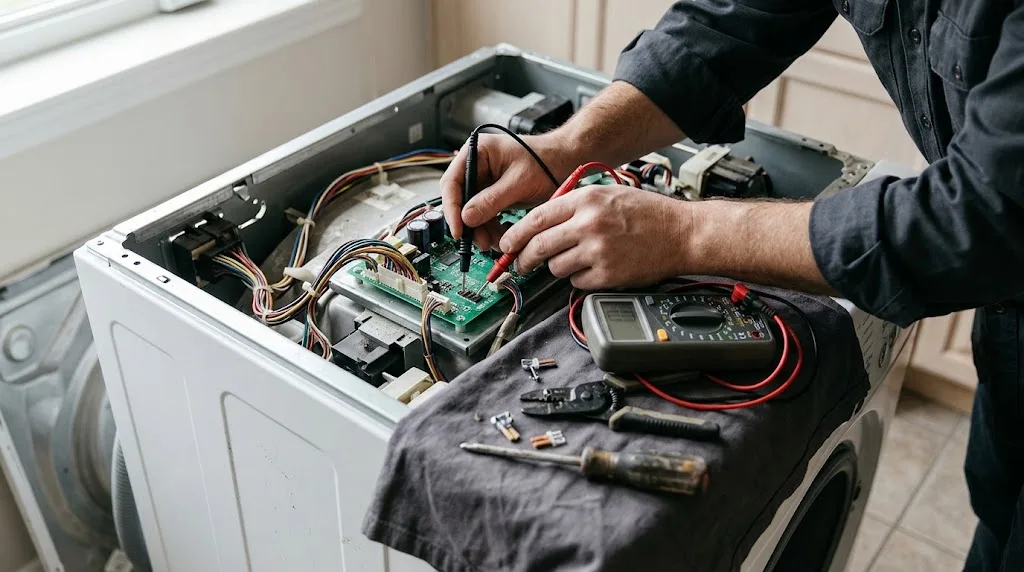
When a direct-drive washer hums, won’t spin or throws a motor error, the stator is often the cause. Our technician removes the rotor, tests the windings and replaces the stator on site where the part is available.
- Rotor removed and windings tested
- Stator replaced on site where the part is available
- Machine run and tested before we leave
Before you call
Five Checks to Try Before You Book a Repair
Give these a go first. They only take a few minutes, and now and then they save you a call-out fee. If you’d rather not try any of them, that’s fine. Just call and we’ll talk it through with you.
- Each check takes only a few minutes
- Could save you a call-out fee
- Not sure? Call and we’ll talk it through
Safety first: turn the machine off at the power point and unplug it before you touch the filter or hoses. If there’s water on the floor near the power point, switch off at the switchboard first, and keep wet hands away from the plug.
- Check the power and the safety switch. Plug a lamp or phone charger into the same power point, and have a look at your switchboard in case the safety switch has tripped. If the washer trips it again, leave it off and give us a call. That points to an electrical fault inside the machine.
- Make sure both taps are fully on. Taps behind the machine get knocked half-closed more often than you’d think. While you’re back there, check the hoses aren’t kinked or squashed against the wall.
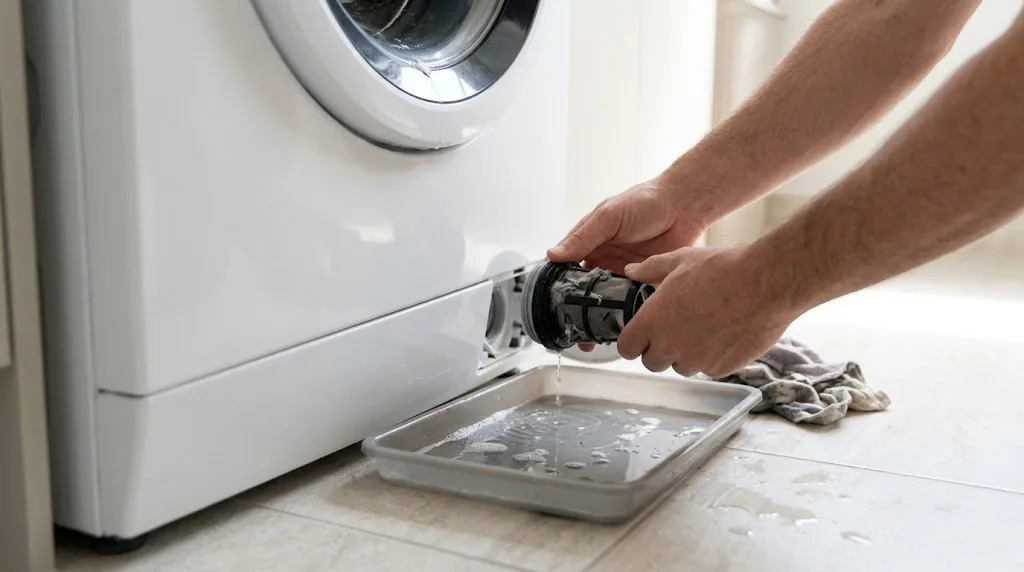
- Clean the pump filter (most front loaders). You’ll find it behind a small flap at the bottom front corner. Put towels down and grab a shallow tray first, because whatever water is left in the drum comes out here, and it’s often more than one tray’s worth. Unscrew it slowly, clear out the coins, hair ties and lint, then screw it back in firmly so it doesn’t leak.
- Rebalance the load. One wet doona, a bath mat or a single pair of jeans can be enough to stop the spin. Throw in a couple of towels or split the load, then run a spin-only cycle.
- Check the child lock. With the child lock on, the buttons can seem completely dead. Your manual will show you how to switch it off. On an LG, “CL” on the display just means child lock. It isn’t a fault.
Still not working? Stop restarting it. Running a machine over and over with a drain or motor fault can flood the floor, or burn out a part that was perfectly fine. Leave the error code on the display if you can, take a photo and call us. That photo often tells us which part to bring.
How it works
How Our Washing Machine Repair Visit Works
1
Tell us what it’s doing
Call 0452 687 383 or book online with the brand, the model number and what’s going wrong. Book online and we’ll ring you back to lock in a time. A photo of the error code or the rating label helps us bring the right parts.
2
Pick a time
Choose a day and time that work for you. We’ll text when the technician is on the way, so you’re not stuck at home waiting.
3
Diagnosis and written quote
The technician tests the machine, shows you the faulty part where possible and explains what has happened in plain English. Then you get the price. There’s no obligation to go ahead.
4
Repair and full test
Once you say yes, we fit the part and put the machine through a full cycle: fill, wash, drain and spin. We also check underneath for leaks before we pack up.
5
Pay and keep your warranty
Pay on the day by EFTPOS, cash, bank transfer or PayID. Your invoice lists the parts we fitted and your warranty, and it’s the only paperwork you need to keep.
Where’s the model number? On most front loaders, check the label around the door opening or on the inside of the door. On a top loader, look under the lid or on the back panel. A clear photo of that label is the single most useful thing you can send us.
Repair or replace
Is It Worth Repairing Your Washing Machine?
Yes, if it’s under about seven years old and the fault is a common part like a pump, door lock, inlet valve or belt. CHOICE suggests a washing machine should last around 10 years, so a younger machine still has plenty of life in it, and fixing it keeps one more big appliance out of landfill. For older machines, two rules of thumb are worth knowing:
The 50% rule
If the repair would cost more than about half the price of a comparable new washer, replacing it usually makes more sense. Compare it with a machine of similar size and quality, not the cheapest one in the catalogue.
Bearings on an older front loader
On many models the bearings are sealed inside the tub, so replacing them means replacing the whole tub assembly. On a machine that’s eight to ten years old, that can cost close to a new washer, and we’ll tell you before you spend a cent.
Check Your Rights Before You Pay
If your washer is only a few years old, check two things before you pay for a repair. First, the Australian Consumer Law says goods have to last a reasonable time for what you paid, even after the manufacturer’s warranty runs out, so the retailer or manufacturer may need to fix it for free. Have your receipt handy when you ask. Second, look up your model on the ACCC’s Product Safety Australia recalls site (productsafety.gov.au). If neither applies, we’re happy to quote.
Brands we repair
Washing Machine Brands We Repair
We work on the washer brands you’ll find in most Sydney laundries, from Simpson and Westinghouse top loaders to LG, Samsung and Bosch front loaders. Every brand has its own habits and error codes, and knowing them is how we turn up with the right part. Not sure if we cover yours? Send us the model number and we’ll let you know before you book.
Samsung
LG
Westinghouse
Electrolux
Bosch
Simpson
Whirlpool
Kelvinator
Maytag
GE
Kleenmaid
33 years on the tools · 12-month warranty
Why choose us
Why Sydney Households Trust Us With Their Washing Machines
33 years on the tools
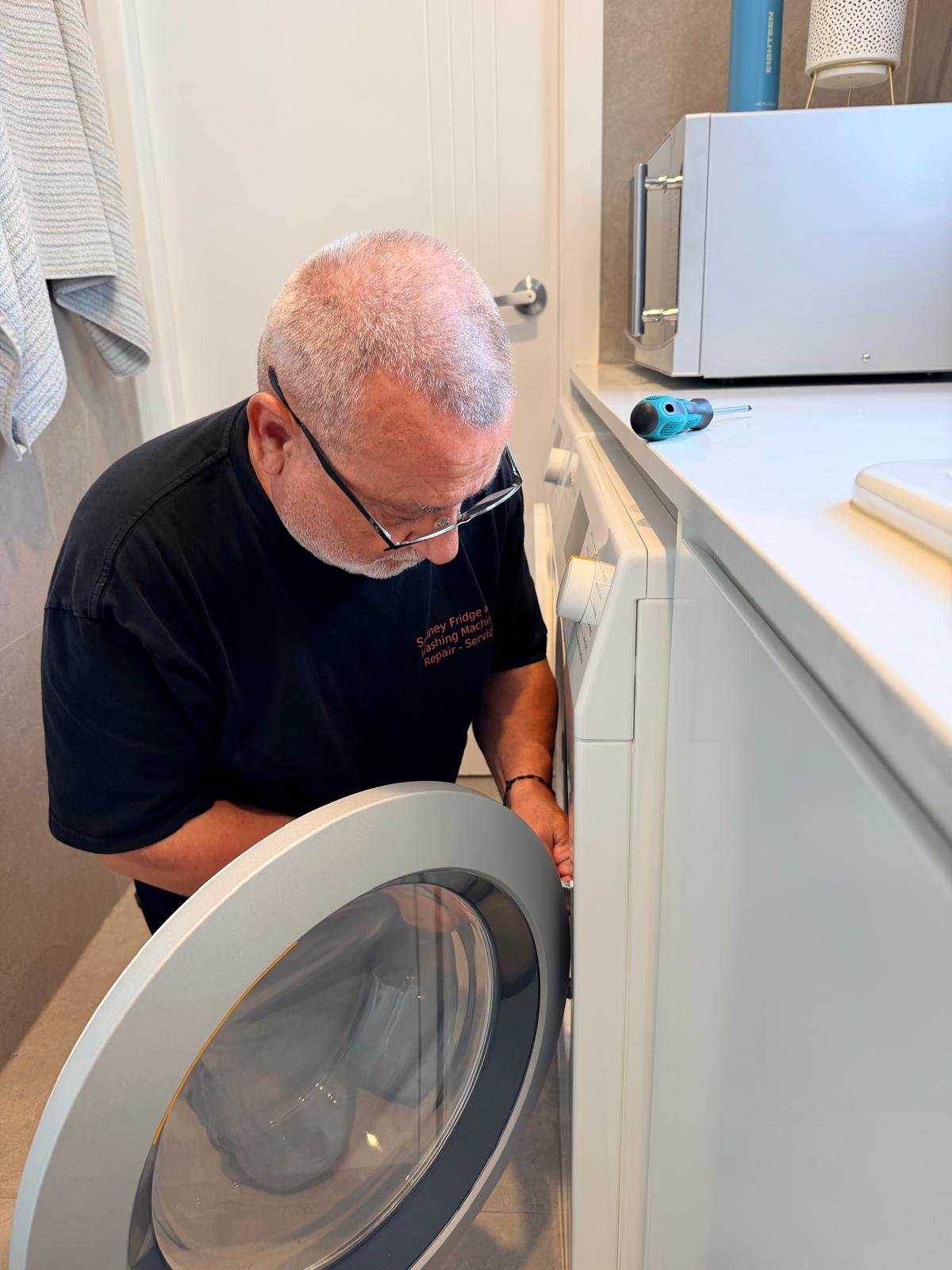
Peter runs the business and has been repairing washing machines and fridges for 33 years. Every job is done by our own team, and we’re fully insured, with public liability cover.
Washers are half of what we do
We fix fridges and washing machines and nothing else. Sticking to two appliances means we see the same washer faults week in, week out, and we know which parts fail on which models.
You see the price first
You know the full cost before any work starts, and there’s no pressure to say yes. If the machine isn’t worth fixing, we’ll tell you, even though it means no repair job for us.
Common parts on the van
Drain pumps, door locks and inlet valves come with us, which is why most washer jobs are done in one visit instead of two.
Tested, then guaranteed
After the repair we run a full cycle and check for leaks before we go. The work is then covered by our parts and labour warranty.
Service areas
Washing Machine Repairs Across Greater Sydney
Our technicians are out across Greater Sydney every weekday and Saturday morning, from Penrith to Bondi and from Hornsby down to Campbelltown. Can’t see your suburb below? Call anyway. There’s a good chance we’re already working nearby.
Parramatta & Western Sydney
Parramatta
Westmead
Merrylands
Granville
Blacktown
Seven Hills
Mount Druitt
St Marys
Penrith
The Hills District
Castle Hill
Baulkham Hills
Bella Vista
Kellyville
Rouse Hill
Carlingford
Cherrybrook
Inner West
Strathfield
Burwood
Ashfield
Five Dock
Leichhardt
Marrickville
North Shore & Ryde
Chatswood
Lane Cove
Ryde
West Ryde
Epping
Macquarie Park
Hornsby
South West Sydney
Liverpool
Fairfield
Bankstown
Prestons
Campbelltown
Eastern Suburbs & CBD
Bondi
Randwick
Coogee
Paddington
Surry Hills
Sydney CBD
FAQ
Washing Machine Repair FAQs
Can’t find what you’re looking for? Give us a call and we’ll help you work out what’s wrong.
Is it worth repairing a 10-year-old washing machine?
It depends on what has failed. A pump, door lock or inlet valve is usually worth fixing, even on a 10-year-old machine, because the parts are affordable and the rest of it may have years left. Bearings or a control board on a machine that age often cost nearly as much as a new washer. We’ll give you the numbers on the spot and let you decide.
How long does a washing machine repair take?
Most repairs take about one to two hours once the technician arrives, because the common parts are already on the van. If we need to order a part, we’ll book you in again as soon as it arrives.
Do you repair washing machines in apartments and tight laundries?
Yes. Stacked units, laundry cupboards and European-style laundries are everyday jobs for us. Let us know about stairs, lifts, parking or building rules when you book, and we’ll plan the visit so it goes smoothly.
My washer is only two years old. Should I pay for a repair?
Check first. It may still be under the manufacturer’s warranty, and the Australian Consumer Law says goods must last a reasonable time for their price, even after that warranty ends. Search your model on the ACCC’s recalls site too. If any of that applies, go to the retailer or manufacturer before you pay for a repair.
What warranty do I get on a washing machine repair?
12 months on parts and labour for the repair we carry out. It’s printed on your invoice, so there’s nothing else to keep track of. If the same fault comes back in that time, call us and we’ll come back and put it right.
Fast, honest repairs
Washing Machine Out of Action? Let’s Get the Laundry Moving Again.
Tell us the brand, the model and what it’s doing. We’ll help you narrow down the likely cause over the phone, then give you a firm price on site before any work starts. Ring on a weekday morning and we can usually be there the same day.
Hours: Mon–Fri 8am–5pm, Sat 9am–12pm · repairsqualityappliance@gmail.com